
OpenAI engineer Arrested for Installing Listening Device
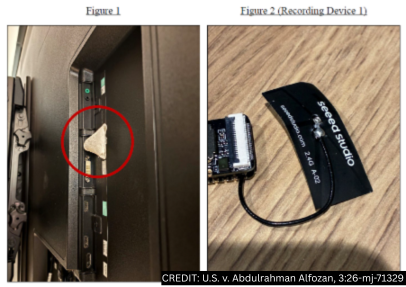
Abdulrahman Alfozan, a 35-year-old engineer at OpenAI, has been arrested for hiding a listening device in the company's meeting room. The device was wrapped in toilet paper and connected to a USB port behind the television. According to the U.S. Department of Justice, Alfozan was taken into custody on October 9, 2026, and has been charged for his actions, but has not yet been convicted. The incident raises questions about the security of sensitive information within high-tech companies.
The listening device was discovered on September 30, shortly after it was allegedly placed, according to the indictment. Surveillance footage shows Alfozan being near the meeting room multiple times, where confidential discussions about research and product plans were taking place. The fact that he frequented this room without permission raises questions about his motives and the access he had within the organization.
The most alarming details in the indictment are the interactions with a chatbot about building the recorder. This occurred through Alfozan's wife's account, which officials noted bore strong similarities to Alfozan's. These queries included technical details about the device, including the unique MAC address, suggesting that there was a carefully crafted plan behind the actions. This aspect highlights the growing role of AI in both malicious and legitimate applications.
The case has broader implications for national security. U.S. Attorney General Todd Blanche has labeled the theft of sensitive information as a serious threat. Espionage in the high-tech sector impacts not only companies in Silicon Valley but also serves as a warning to other countries, including the Netherlands, where technology is also seen as a valuable target. The annual report from the AIVD notes that countries like China are targeting technological knowledge from the Netherlands.
Read the full article from AI Insider.
Gerelateerde artikelen

Microsoft supports recompilation projects through Xbox Labs
Microsoft has officially announced Xbox Labs, an initiative aimed at supporting the decompilation and recompilation projects that have recently gained more attention. These projects are crucial for th...

Tech Festival
14 October 2026

Google allows users to add apps to Play Store
Google has announced that everyone with a Google account will soon have the ability to add their own apps to the Play Store without requiring any coding knowledge. This means that even non-technical u...
Tech Festival
14 October 2026

Facebook introduces 'Your Algorithm' for users
Facebook has been trying for some time to understand what interests its users. The platform analyzes likes, comments, and scrolling behavior to provide a personalized experience. However, with the int...
Tech Festival
14 October 2026