Power Consumption of AI and the Future of Data Centers
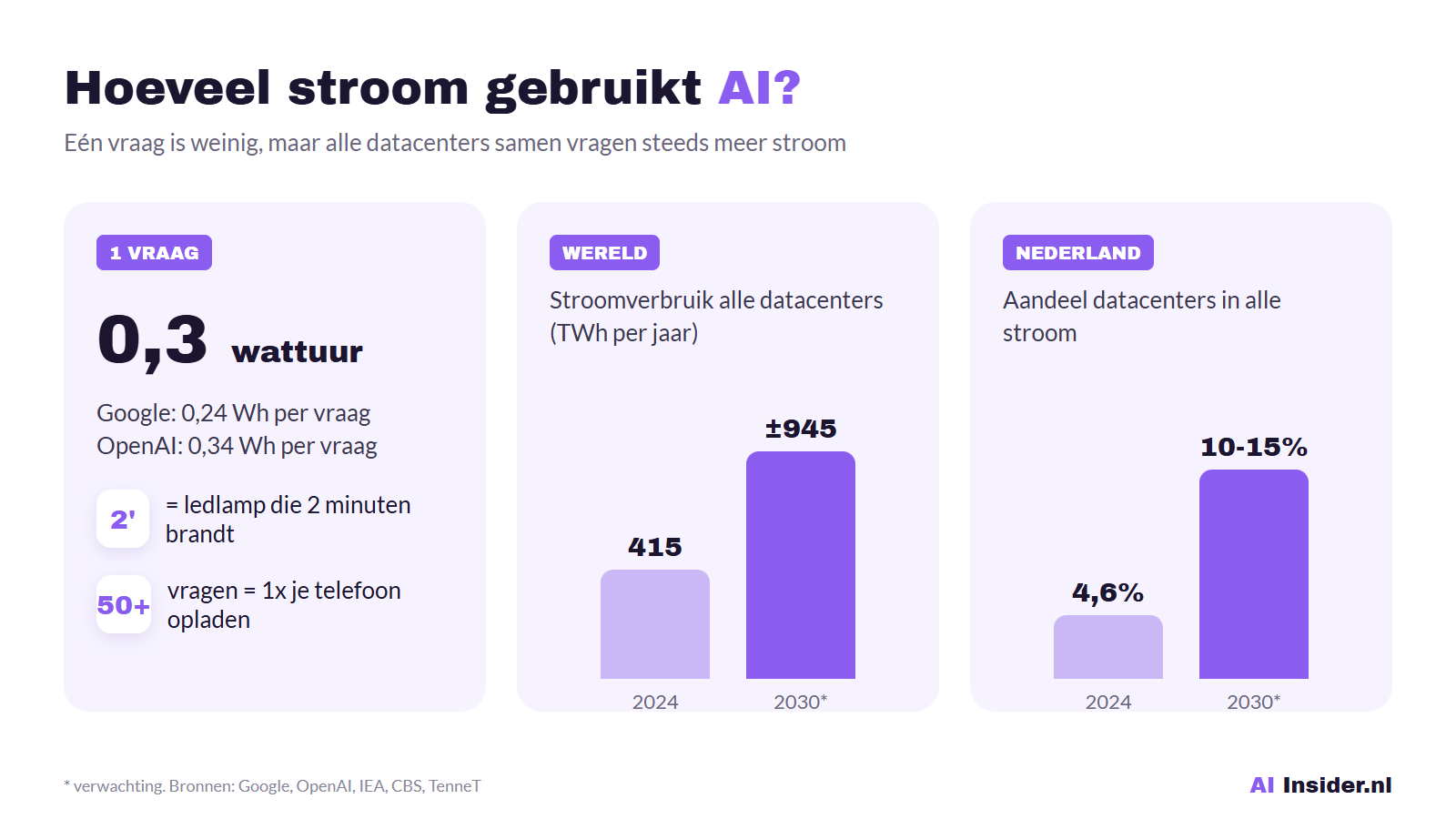
The demand for the power consumption of AI, such as when using ChatGPT, proves to be less rosy than expected. One question to the chatbot costs only about one-third watt-hour, which corresponds to the energy consumption of an LED lamp for two minutes. This seems little at first glance, but the reality goes further. Tech companies are building data centers that consume so much energy that they need to activate complete nuclear power plants to meet their needs.
The electricity costs for AI tools heavily depend on the nature of the requests. Shorter questions are less energy-intensive than extensive reports or complex analyses. However, the usual servers in data centers draw much more energy. A single server rack with modern AI chips from Nvidia can consume up to 120 kilowatts, which requires as much energy as simultaneously powering hundreds of households. Combined with the large number of questions being asked at the same time, the energy consumption of AI is substantial, with figures predicting a troubling increase. In 2024, data centers worldwide consumed about 415 terawatt-hours of electricity, and the IEA predicts this could rise to 945 terawatt-hours by 2030, largely driven by AI.
In the struggle for sufficient energy supply, tech companies are increasingly opting for nuclear power. For example, Microsoft has made a deal to purchase power from a reactor near Three Mile Island for the next two decades, while Amazon is building a data center campus near a nuclear power station. This choice is attractive because nuclear power offers a constant power supply without CO2 emissions. However, this is complicated by the limitations of existing energy networks, which are already full in many regions. In the Netherlands, data centers currently use 4.6 percent of the total electricity supply, equivalent to the energy consumption of nearly two million households. This share could rise in the future to 10 or even 15 percent.
The growth of AI and the resulting power demand raises new questions about energy supply in the Netherlands. Grid operator TenneT has already announced significant delays in connecting new energy demands to the grid. All of this leads to the inevitable question of where the required power should come from and how to prioritize the various consumers in an increasingly crowded energy grid.
Read the full article from AI Insider.
Gerelateerde artikelen

Facebook increases user control over algorithm
Meta, the parent company of Facebook, introduces a new feature called 'Your Algorithm'. This AI-driven tool gives users more control over the algorithm that determines which content they see in their...

Tech Festival
13 October 2026
Longshot: space travel with a cannon
Longshot, a promising startup in space technology, has developed a bold approach for transporting cargo to space. Unlike traditional rockets, this company focuses on building a massive cannon capable...
Tech Festival
13 October 2026
Google introduces Gemini 4 Argon for global use
On October 13, 2026, Google announced that Gemini 4 Argon is globally available for consumers, developers, and businesses. This AI model is designed to perform complex tasks such as programming, finan...
Tech Festival
13 October 2026