
NVIDIA CUDA-X Libraries Accelerate Scientific Research
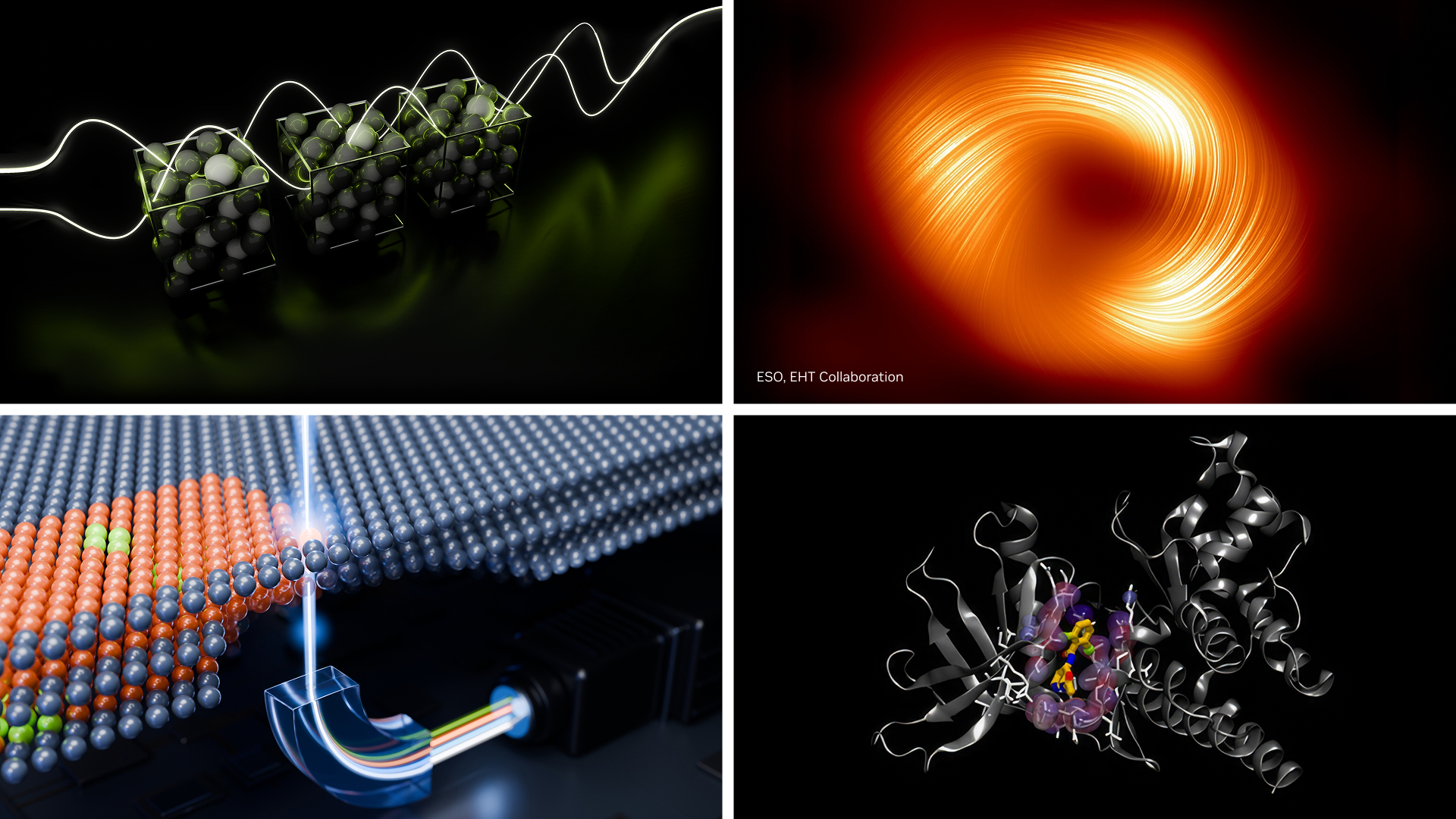
NVIDIA has expanded its CUDA-X libraries with new modules like cuPhoton, cuPotential, and cuSpa, enabling researchers to search massive amounts of data and accelerate scientific research across diverse disciplines such as astrophysics, materials science, and single-cell biology. These libraries provide AI agents with the tools to make discoveries more efficiently than ever, allowing scientists to analyze larger datasets and model more complex systems.
A notable example is the application of the cuPhoton.xBeam module within the cuPhoton Toolkit, which allows for much faster correlation of data from the Event Horizon Telescope, focused on studying black holes. Analysis that previously took months can now be completed in just eight minutes. This involves combining global radio dishes into a giant telescope, leading to unprecedented astronomical imaging resolution.
In addition to astrophysics, the new libraries are also being applied in fusion research and drug development. Researchers at Pacific Fusion utilize the cuPhoton.xLens module for real-time insights during plasma simulations, helping them design fusion reactors. The cuPotential library accelerates molecular simulations by up to three times, enabling scientists to better prepare costly laboratory experiments by identifying previously hidden molecular binding sites.
Moreover, the Daviator GPU kernels for the Vienna Ab initio Simulation Package significantly accelerate quantum mechanical calculations, with a speedup of up to 22 times and lower costs. In biomedical research, the cuSpa library also shows impressive results, such as the 900x accelerated generation of large spatial graphs in cancer models. With the open-source HMMER library, which speeds up protein sequence annotation, companies can significantly enhance the analysis of large datasets for therapeutic design.
Read the full article from Nvidia.
Gerelateerde artikelen

Humyn Labs raises $47 million for data to robotics
Humyn Labs, founded in February, has successfully raised $47 million to provide training data to American robotics and AI developers. The company, which operates in a competitive market alongside star...

Tech Festival
18 November 2026

GTA VI now available, how to avoid spoilers?
GTA VI has officially launched and is now available to play, starting in New Zealand. Rockstar Games released the new game worldwide at midnight, which means players in New Zealand can start a whoppin...
Tech Festival
18 November 2026
Solutions Against Chinese Monopoly in Graphite Industry
Chinese companies have near-total control over the graphite industry, a critical raw material for battery production. This dominance hinders competition and innovation in the sector, especially as the...
Tech Festival
18 November 2026