
Robotaxi leaders build on NVIDIA technologies
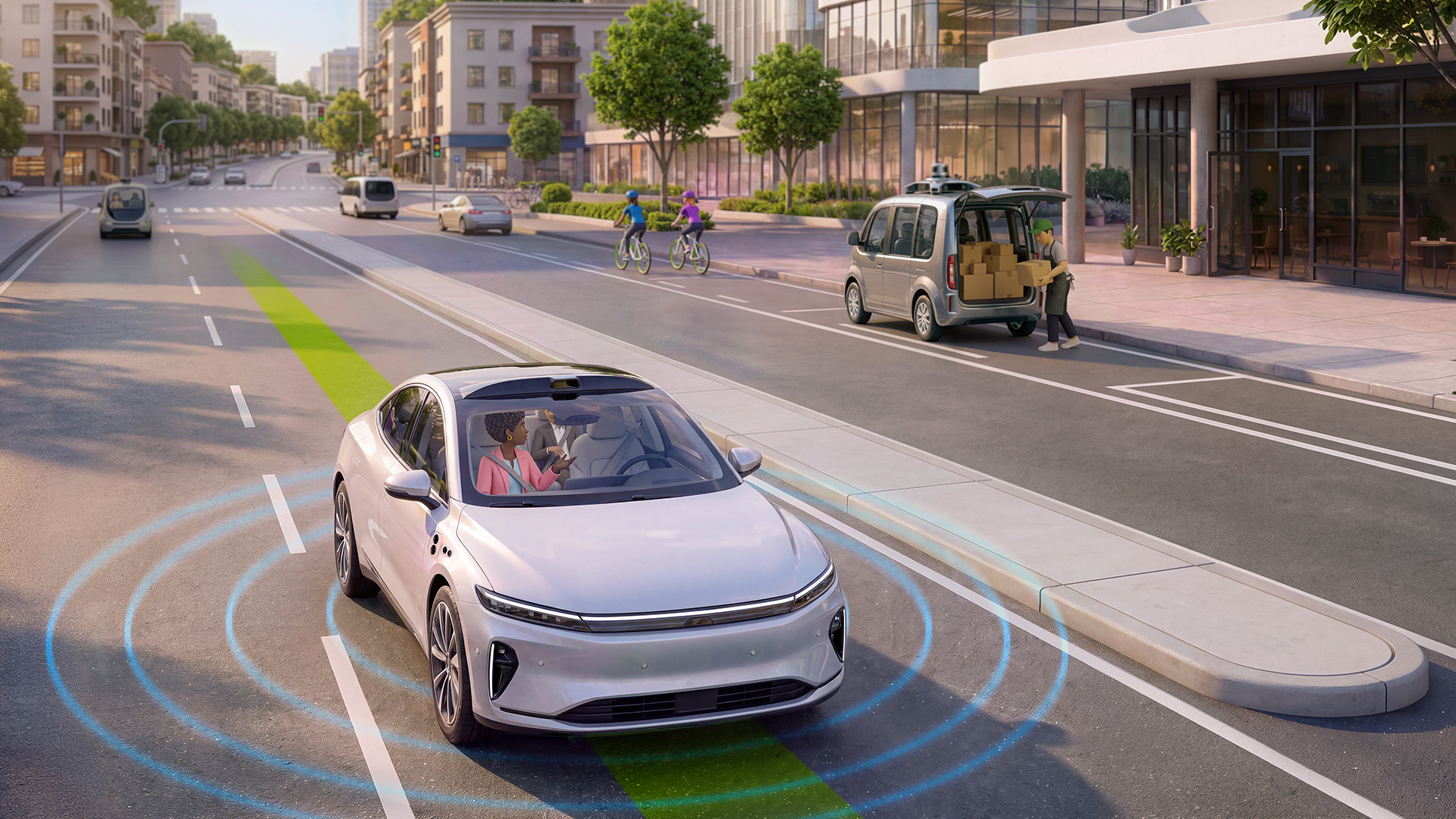
The global robotaxi market, positioned as the first commercial breakthrough of physical AI, is expected to be worth $400 billion by 2035. By that time, more than 6 million commercial vehicles will operate, transporting people through some of the busiest and most complex streets in the world with autonomous fleet services. Rolling out a self-driving vehicle poses challenges, but scaling a fleet brings a new set of computational requirements, where safety and reliability are essential.
Meeting these demands requires enormous amounts of computing power throughout the entire lifecycle of robotaxi development. From preparing and training AI models to simulating and validating driving behavior, as well as real-time processing in the vehicles themselves. NVIDIA provides an open platform for AI training, simulation, and safety validation, equipped with libraries and software development tools that developers can leverage alongside their own technologies.
NVIDIA's robotaxi technology stack integrates these capabilities into a solution with three computers: a training computer, a simulation and validation computer, and in-vehicle computing. NVIDIA DGX systems are used for training driving models, while NVIDIA Omniverse and Cosmos provide simulations of complex driving conditions. The in-vehicle computer, NVIDIA DRIVE Hyperion, is designed for executing modern AI tasks, such as perception and path planning, and supports fail-operational driving.
Key players in the robotaxi market, including Uber, Lyft, and May Mobility, utilize NVIDIA's robotaxi technology stack to train and deploy autonomous vehicles at scale. With collaborations across various regions, these companies are expanding their robotaxi services, leveraging NVIDIA's infrastructure for safe and reliable autonomous mobility. Tesla, Mercedes-Benz, and Hyundai are also among the partners integrating NVIDIA technology into their autonomous vehicles, further accelerating the transformation of autonomous mobility.
Read the full article from Nvidia.
Gerelateerde artikelen

YouTube introduces new video codec AV2 in 2027
YouTube has announced that it will start offering videos via the new video codec AV2 in early 2027. This innovative technology promises a significant improvement in video quality by using data more ef...

Tech Festival
25 October 2026

Trioworld: Energy from Dirty Factory Air
The Dutch packaging company Trioworld, based in Harlingen, has developed an innovative approach to dealing with dirty factory air. Instead of simply venting this air, the company has built a special i...
Tech Festival
25 October 2026

Startup develops genetic super dogs for the military
The American startup Warhound has ambitious plans to transform military dogs into advanced super animals. This endeavor involves modifying the genes of these dogs and also exploring the cloning of spe...
Tech Festival
25 October 2026