Reverse Engineer Anything: new GitHub tool for AI

The recent launch of the open-source tool REA, or 'Reverse Engineer Anything', has attracted the attention of developers, software companies, and legal experts. With this tool, users can utilize AI agents such as Claude Code, Codex, Cursor, and Gemini CLI in combination with professional reverse engineering tools like Ghidra and IDA Pro. This enables them to dissect applications and rebuild functions without access to the original source code. The popularity of REA has skyrocketed, with an increase from less than 10,000 to over 110,000 stars on GitHub within a week.
REA, developed by the anonymous developer morluto, offers a user-friendly way to perform reverse engineering. Traditionally, this requires specialized knowledge and expensive software to analyze machine code. With the new MCP server, AI agents can now also decompile, dissect apps, and monitor program behavior in three steps: decompile, monitor behavior, and reconstruct logic in a new project. This is particularly attractive for developers looking to incorporate features from existing applications into their own projects.
However, there are critical voices. Experts point out that the technology behind REA is not entirely new; similar tools have been available for some time. Additionally, it turns out that heavily encrypted software is not easily cracked, even with this new tool. Legally, REA operates in a gray area. In Europe, decompiling for interoperability is allowed, but not to recreate functionalities. In the US, such restrictions in licensing agreements are typically enforceable.
The impact of REA on software companies cannot be underestimated. The accessible nature of reverse engineering drastically lowers the barrier to dissecting software, which poses a significant risk for applications that run their valuable logic on the user's computer. Experts advise software companies to place sensitive code on their own servers instead of integrating it into end products. The usage possibilities of AI for both attack and defense are relevant in this context, and the potential of AI to protect software should not be overlooked.
Read the full article from AI Insider.
Gerelateerde artikelen
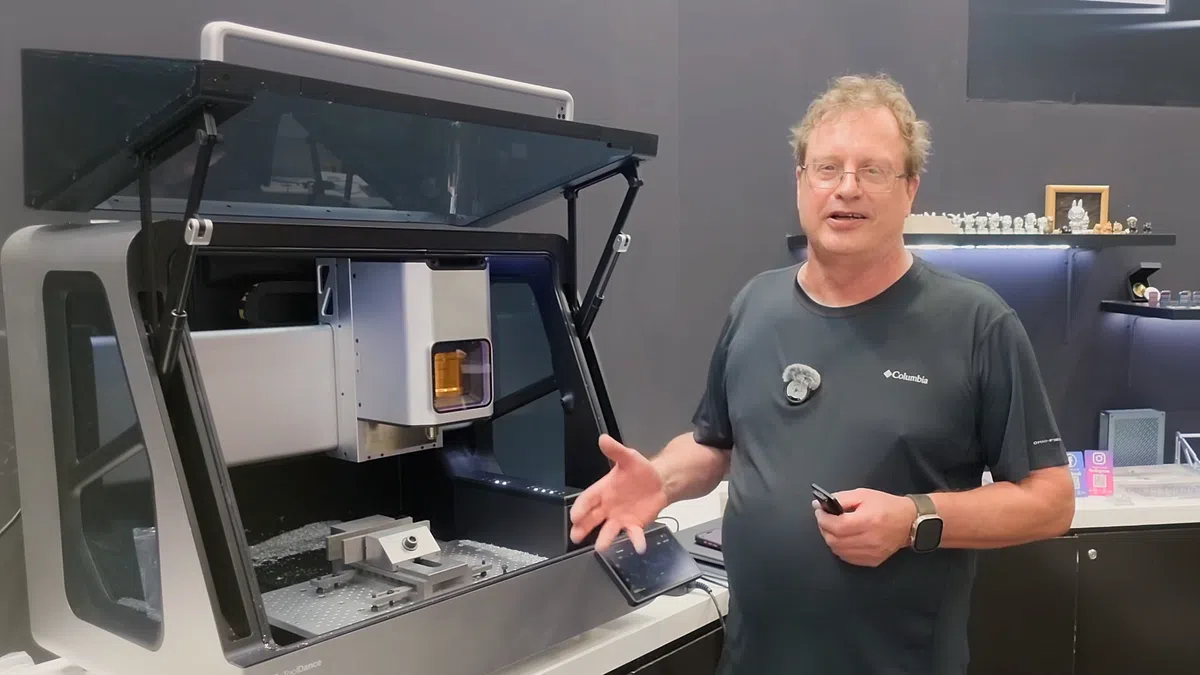
Democratization of Digital Fabrication
The rise of digital fabrication offers unprecedented opportunities for both consumers and businesses. Today, 3D printers are ubiquitous, enabling individuals to produce various plastic objects at home...

Tech Festival
13 October 2026

Cyberattack hits major French supermarket chains
Following the recent cyber issues at Albert Heijn, where it has not yet been officially confirmed that it is a hack, multiple major supermarket chains in France have now fallen victim to a cyberattack...
Tech Festival
13 October 2026

WhatsApp introduces long-awaited message scheduling feature
WhatsApp appears ready to introduce a feature that many users have long desired: the ability to schedule messages. This feature, which has been available on competitor Telegram since 2019, allows user...
Tech Festival
13 October 2026