
AI increasingly used for master's theses

Recent research shows that one in five master's theses at Dutch universities has been largely written by a chatbot. This percentage comes from a check carried out by RTL Nieuws, which analyzed hundreds of theses using Pangram, a program that can detect whether texts originate from AI. One in five theses contained more AI-generated content than that of the students themselves, with even six percent of them having almost all text written by AI. Minister of Education, Letschert, calls this fraud and urges universities to take action.
The students involved consider the use of AI for their theses as normal and have little understanding of the concerns of universities. They refer to social media, such as TikTok, where techniques and tips are shared to "humanize" AI texts and bypass detectors. There are also paid programs available that claim to rewrite AI texts so that they are no longer recognized as such. However, there is some concern about the effectiveness of these tools, especially as updates to detection software, such as Turnitin, increase the chance that such texts will still be unmasked.
Universities have different rules regarding the use of AI, leading to some confusion. For example, UvA has allowed AI under certain conditions, but the dean of the economics faculty emphasizes that a detector score is not irrefutable evidence of fraud. The jurisprudence surrounding AI fraud is not crystal clear; there are cases where students have been suspended or rejected based on the use of AI-generated content, but also situations where the court has ruled in favor of students due to lack of evidence of intent.
To circumvent the uncertainty that AI detection software brings, some teachers are reverting to traditional assessment methods such as oral exams. There is division among academics regarding the effectiveness of this approach and the role of the teacher as a verifier. While some lament the increase in oversight, others advocate for a more nuanced approach to AI in education, where its use is not just labeled as fraud.
Read the full article from AI Insider.
Gerelateerde artikelen

Fairphone launches improved and cheaper earbuds
Fairphone has launched the new Fairbuds 2, an update of their previous model, which further focuses on sustainability and repairability. The updated earbuds maintain a high level of repairability, one...

Tech Festival
14 October 2026

Men bluff more about AI knowledge than women
A recent survey by the Harvard Kennedy School, conducted among more than 5,400 Americans, reveals that more than half of men claim to know two fictional AI top executives. This percentage is much high...
Tech Festival
14 October 2026
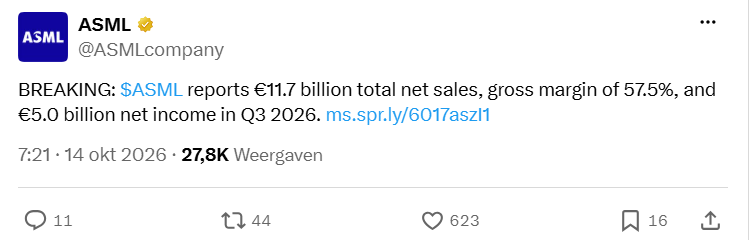
ASML expects higher revenue due to AI demand
Chip machine maker ASML has raised its revenue forecast for 2026 to 44 to 45 billion euros, an increase from the previous estimate of 43 billion euros. This adjustment is a direct result of increased...
Tech Festival
14 October 2026